The class WhatsApp group: a survival guide
Nearly four in ten UK parents regret joining the class WhatsApp group, and a third find it useful. How to get the useful third without the rest, what to mute, when to leave, and what to do with the messages that matter.
By The AskBobbie team · 28 September 20264 min read
Somebody's child has lost a jumper. Somebody else has found one, but it is a different jumper. A third parent would like to know if anyone else has heard anything about the trip, and a fourth has heard something about the trip but it turns out to be about a different trip. It is 9:42pm and your phone has buzzed eleven times.
A survey this year found that nearly 40% of UK parents regret joining their school WhatsApp group, and that more than a quarter feel the conversation is dominated by one over-eager parent. A third, though, still find it useful. This guide is about getting that third without the other two.
Why the group exists
Schools send between 40 and 70 messages a week in term time, across ParentMail, Arbor, ClassDojo, email and the book bag. The class group grew up because nobody can keep up with that, and a message from another parent at 7:30am saying "it's non-uniform day" is faster than any system the school runs.
That is the useful part, and it is worth keeping. The group is at its best as an early-warning system for things the school said quietly and everybody missed. It is at its worst as a place for opinions.
Set the rules on day one
The groups that work have two or three lines at the top, agreed in the first week of September, usually by whoever set the group up. Something like:
- This group is for practical things the whole class needs: dates, kit, lost property, quick reminders.
- Anything about a particular child, parent or teacher goes to the school, not here.
- If it is only for one person, message them directly.
If your group has no rules and September has passed, you can still post them. Frame it as a favour to newcomers ("for anyone who's just joined") and most people will be relieved.
Mute it, immediately
Open the group, press its name, and choose Mute notifications, then Always. On iPhone you can also swipe left on the chat and mute from there.
Muting is silent: nobody is told. You still see every message when you open the chat, and WhatsApp still shows a count of unread ones. What stops is the buzzing. Most of the useful third of parents have done this already, which is why the same two people seem to reply to everything.
If you want a middle way, mute the group but ask WhatsApp to notify you when someone @mentions you. That is under Notifications in the group's settings.
Pin, archive, or leave
- Pin the group to the top of your chats if you check it once a day on purpose.
- Archive it if you want it out of sight but still there. Archived chats stay archived even when new messages come in, unless you change that setting.
- Leave if it costs you more than it gives. It is more common than it feels, and nobody keeps a list. If it helps, tell one parent you trust and ask them to message you directly about anything that matters.
"I left the Year 2 group in October and told one mum. She's messaged me four times all year, and every one of them was something I needed to know." Tom, Bristol, children in Year 2 and Year 6
What to do with the messages that matter
The real problem with the class group is not the noise. It is that the one message that matters, "the trip money is due Friday, not next week", sits in the same stream as forty that do not, and there is nowhere to put it.
Three things work:
- Forward it to yourself, or to a calendar. Long-press the message, Forward, and send it to your own number or to a family group. Clunky, but it makes the message findable later.
- Screenshot it and file it. A folder of screenshots is better than nothing, and lets you search by date.
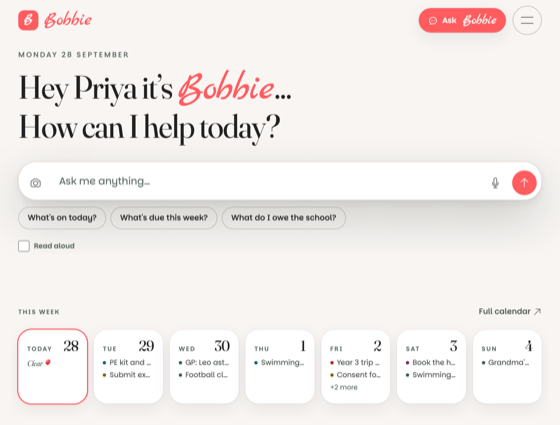
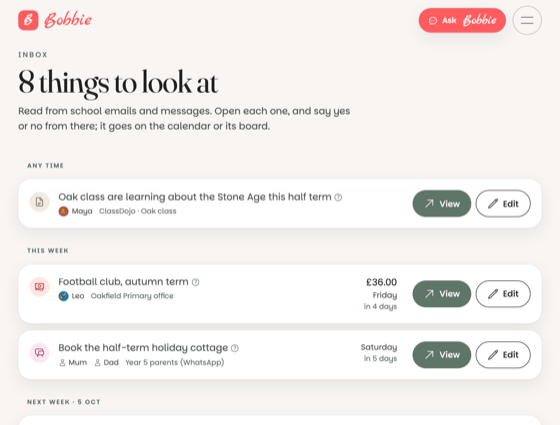
- Send it to something that reads it. This is what Bobbie is for: forward the message, or a screenshot of it, to Bobbie's WhatsApp number, and the date, the money and which child it is for go onto the family calendar for you to check. The class group carries on being the class group; the things in it that matter stop living there. If you want to try that, linking your WhatsApp takes a minute.
The unwritten rules
- Answer the question, not the thread. If someone asks what time the concert starts, say the time. Do not say "I think someone posted it last week".
- One reply per lost jumper. If you have found it, say so once and arrange the handover directly.
- Do not @everyone. Ever.
- Take it offline before it gets warm. The moment a thread turns into a disagreement, message the person directly, or leave it.
- Assume the teacher reads it. They often do, second hand, and a group that speaks about staff the way it would to their face is a group that stays useful.
If you are the admin
You did not sign up to run a community, but you are running one. Three things make it lighter:
- Post the rules, and repost them each September.
- Pin the two messages people always need: the school's term dates page and the office email address.
- When a thread goes wrong, you are allowed to say "let's take this one to the school" and mean it.
And the same advice as everyone else: mute it. Being the admin does not mean being on duty.
Sources: Checklists, "Parents: School WhatsApp chats dos and don'ts"; Understand Tech, "Group chats and messaging etiquette: a practical guide for UK families"; Sense, "Best family organiser apps UK 2026" for the count of school messages a week.
Questions people ask
- Is it rude to mute the class WhatsApp group?
- No. Muting is invisible to everyone else, and most of the group has already done it. You still see every message when you open the chat; you just stop being interrupted by them.
- Can I leave the class group without offending anyone?
- Yes, and it is more common than it feels. If it helps, tell one parent you trust that you are leaving and ask them to message you directly about anything that matters. Nobody keeps a list.
- What should a class group be used for?
- Practical things the whole class needs in the next few days: a forgotten deadline, a lost jumper, a reminder about the trip. Not opinions about the teacher, other children, or a debate about the right kind of trainers.